
Spreadsheets are not the enemy
Excel is flexible and familiar, and for a small business it can be the right tool for years. The trouble starts when the spreadsheet becomes the system that the whole company depends on.
Signs you have outgrown it
If several of these are true, a connected system will save time.
- More than one person edits the same file and versions get mixed up
- The same data is typed into two or three sheets
- Nobody is sure which file is the latest
- Reports take hours to prepare each month
- You cannot control who sees salary or profit
- A single mistake in a formula goes unnoticed for weeks
What a system adds
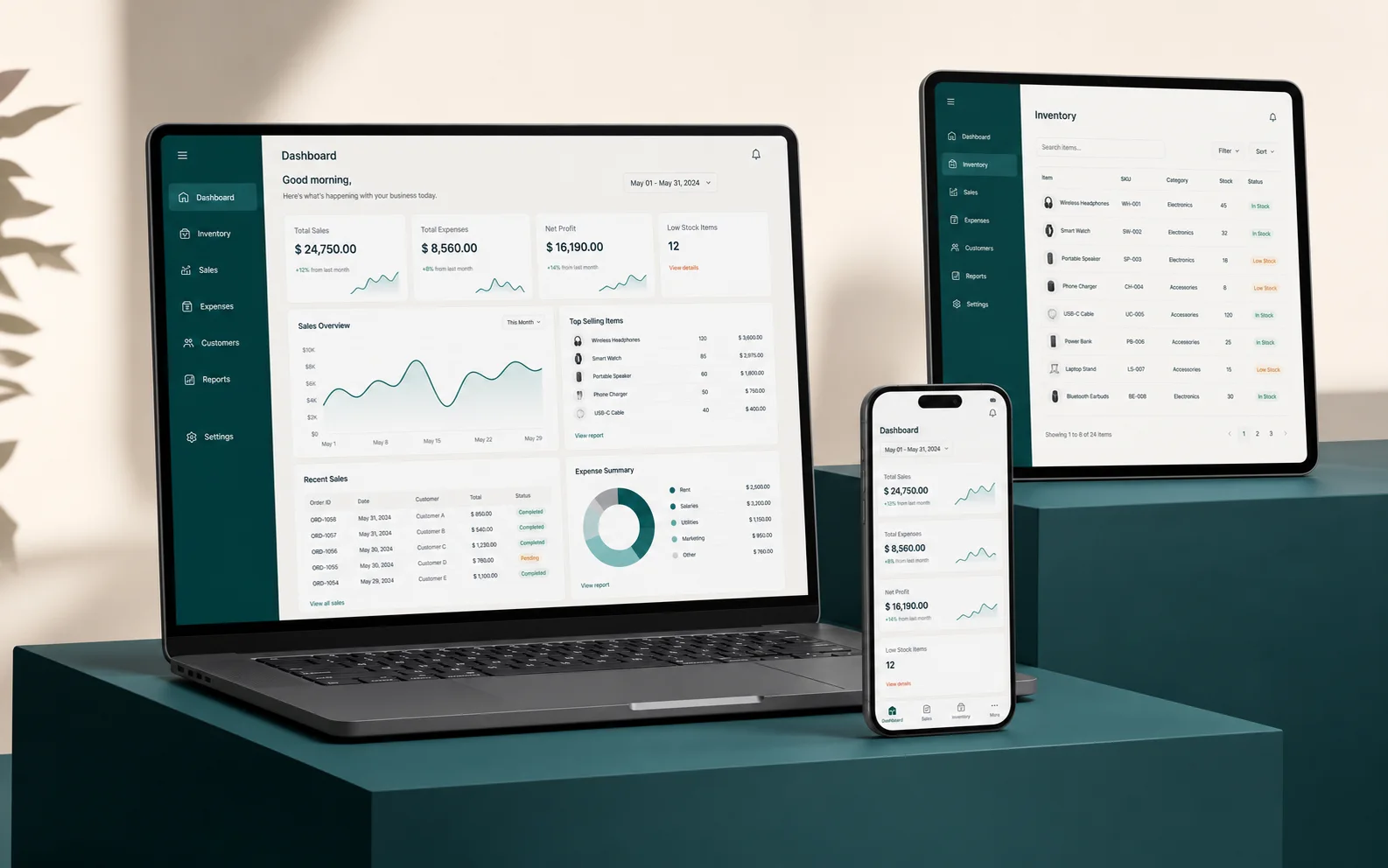
Business software keeps one version of each record, controls access by role, validates entries and produces reports from live data. It also keeps a history of who changed what, which spreadsheets do poorly.
What you should keep
You will probably still use Excel for analysis and one-off calculations. Good software exports data to spreadsheets so your analysis continues to work.
Moving without chaos
Clean your data first, remove duplicates and decide which fields you actually need. Import the essentials, such as products, customers and opening balances, and run both systems briefly in parallel before retiring the old files.
This article is general guidance for business owners and is not legal, tax, financial or medical advice. See our disclaimer.