
ERP in plain words
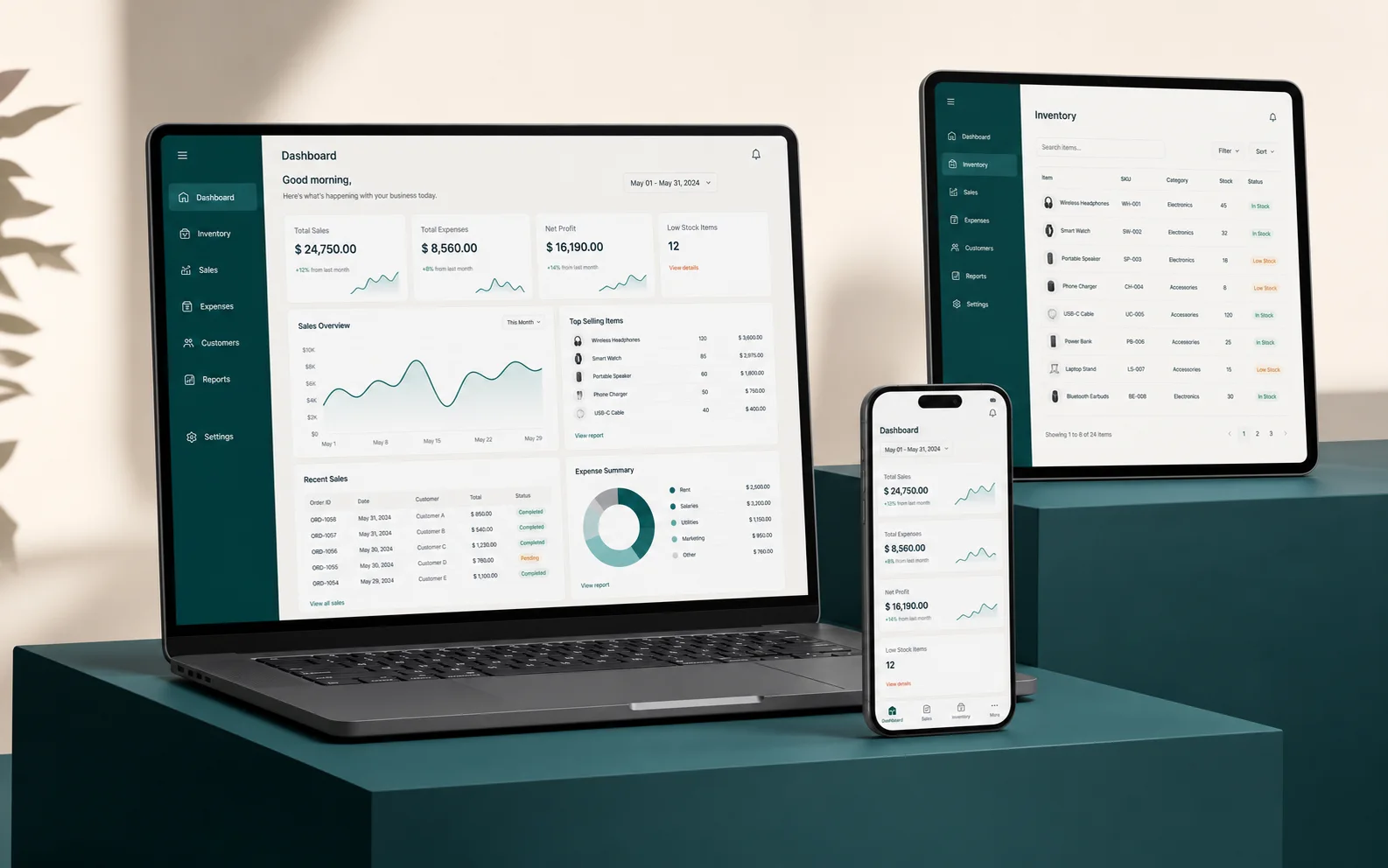
ERP stands for enterprise resource planning. It means connecting the main parts of a business, such as sales, purchasing, inventory, accounts and people, so that they share data. The word sounds large, but the idea is simple: enter information once and use it everywhere.
How it differs from CRM and POS
A CRM manages relationships and leads. A POS handles billing at the counter. An ERP covers more of the back office and the links between departments. Many small businesses need a focused tool in one of these areas rather than a full ERP.
Do you need a full ERP?
Ask whether your main pain comes from one area or from the gaps between areas. If it is mostly billing and stock, a POS and inventory system may be enough. If sales, purchasing, accounts and operations are constantly out of step, a broader system may help.
Avoid buying more than you use
Large systems often come with many modules that a small business never opens. Choose software that lets you begin with the areas that hurt most and add modules as the business grows.
Questions before you buy
Evaluate any system with practical questions.
- Which of our daily tasks becomes faster?
- Which reports will we see that we cannot see now?
- How long to train the team?
- What does it cost to change something later?
This article is general guidance for business owners and is not legal, tax, financial or medical advice. See our disclaimer.